Base build

Base build testingLB500LB600LB700ACLB 200Standard or solid-state switching

End-of-line

End-of-line testingLCLB 160LCLB 240ACLB 60

Applications

Cooling

Chillers and cooling plantStatic and dynamic load testing

Power

UPS systemsGeneratorsSwitchgear and power qualityProtection settings

Explained

Liquid coolingGPU load testingWater qualityLoop monitoringCommissioning

Equipment

Commissioning equipment

Manifold trolleyFlushing & refill cart

Tools

The full rangeSizing calculatorDatasheets

Services

Commissioning supportLoad bank hireHigh load simulationBespoke load banksSupply and installationMaintenance and repairDeployment and managementBuy or hireProjects

Company

AboutPartnersProjectsAcademyNewsEventsFAQ Speak to the team
Protection settings

Protection settings under AI load

Protection set for a steady load has proven it trips on a fault. AI load produces fast transients, so the settings have to be shown ignoring a surge and still acting on a fault.

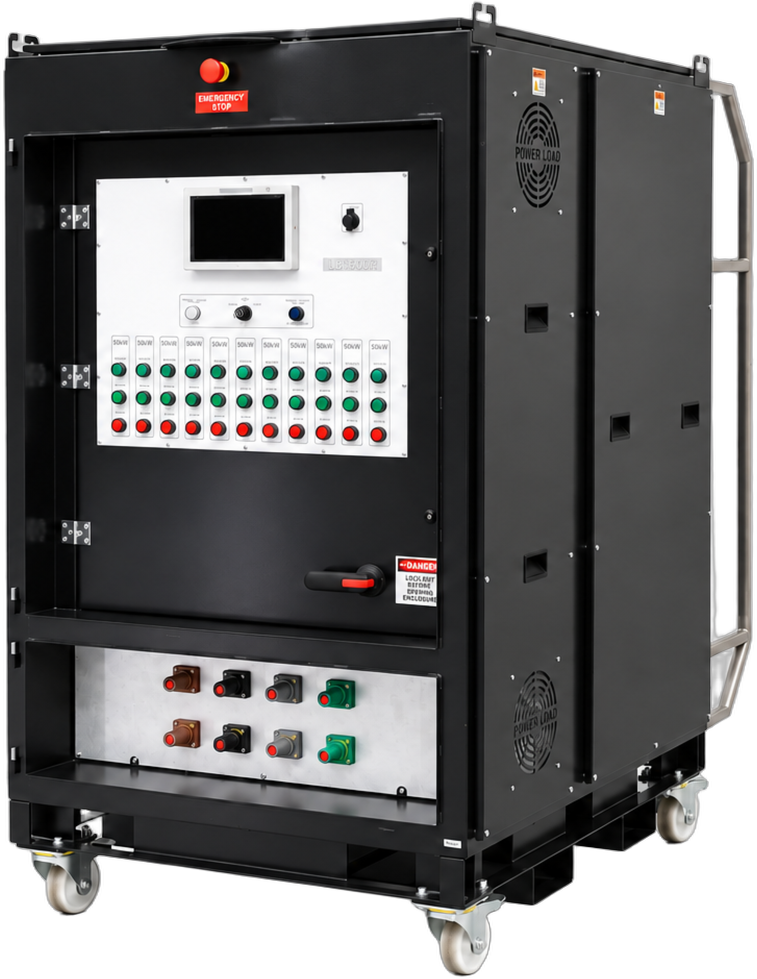
Protection and switchgear panel in a data centre
SettingsChecked against transients
SurgesApplied on purpose
2Ranges used
RackPosition tested

Testing protection settings means applying the transient electrical spikes of AI racks and checking that protection stays closed on a surge and still operates on a fault. Base build testing proves the settings at the riser under the full IT load. End-of-line testing applies the surges at each rack position, where local protection sits, so settings and discrimination are adjusted against measured behaviour.

What it shows

What the test shows

A trip found in testing is a settings change. The same trip in a live hall is an outage.

Nuisance trips

Whether a healthy circuit opens on a fast load change.

Discrimination

Whether the right device operates first during a real transient.

Restarts

Whether inrush during a restart sequence is read as a fault.

Repeatability

A rare event reproduced on demand, and captured in the log.

Which range

Base build first, end-of-line second

Protection is first checked under full load, then against the load as the racks will apply it.

Equipment

What is used

The load is repeatable from one controller, so a surge that caused a trip can be applied again.

  • LB500, LB600 or LB700 for the full IT load at the riser
  • LCLB 160 or LCLB 240 for surges at the rack position
  • ACLB 200 for portable air-cooled load, with steps from 1kW
  • Repeated cycling, because nuisance trips are often intermittent
  • Every event logged and exportable, so a rare trip is captured rather than debated
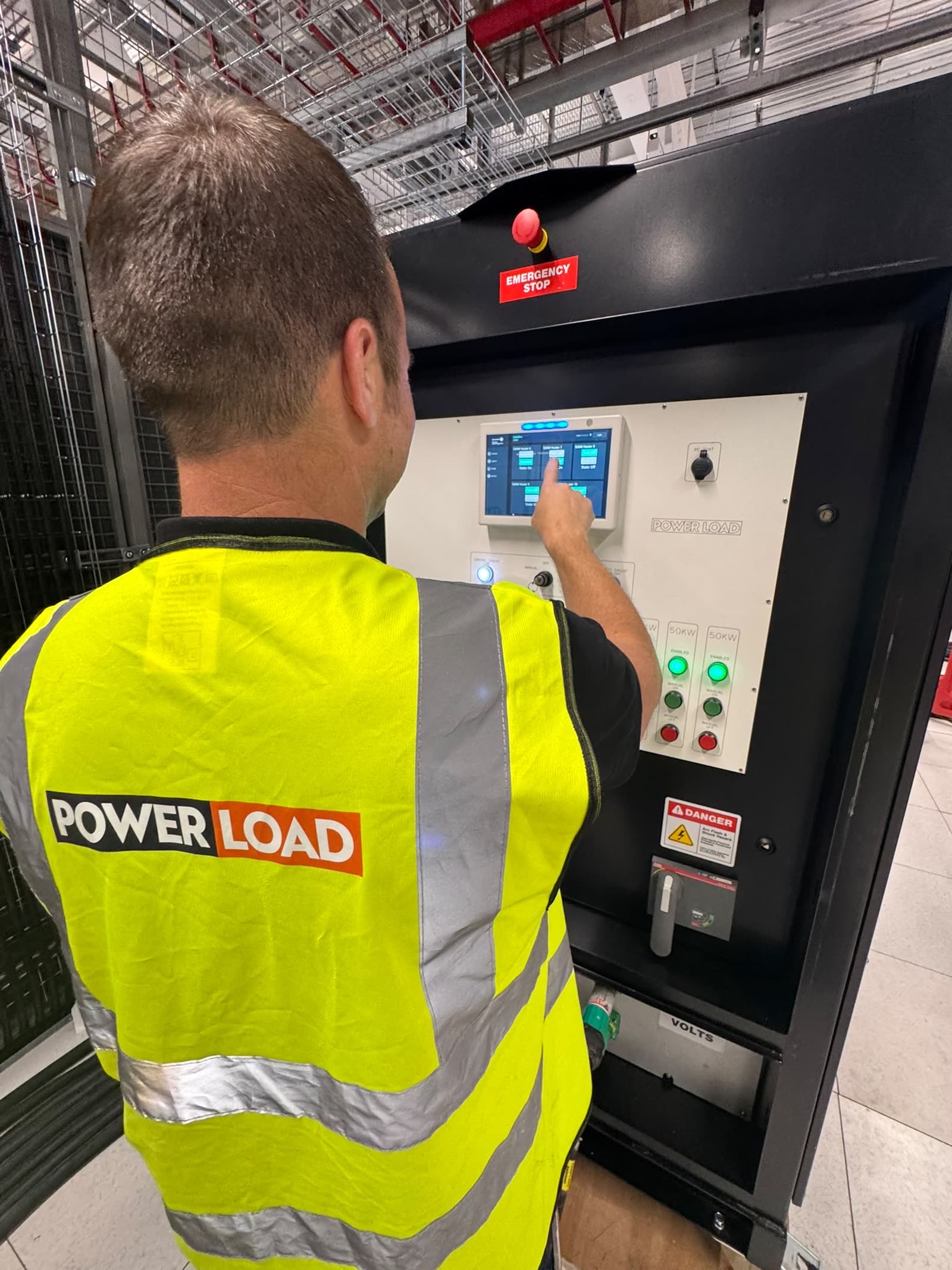
Engineer stepping load from the PowerLoad control panel
FAQ

Protection settings, answered

By applying the transient electrical load of the racks, repeatedly, and checking that protection stays closed on a surge and operates on a fault.
Rarely. The device is usually doing what it was set to do. The settings need adjusting against the measured load.
Because the local protection sits at the rack, and a hall proven only at the riser has not exercised it.
Related

Related applications

Check the protection settings before handover

Tell us the protection arrangement and the IT load. We will help you specify the transient test.