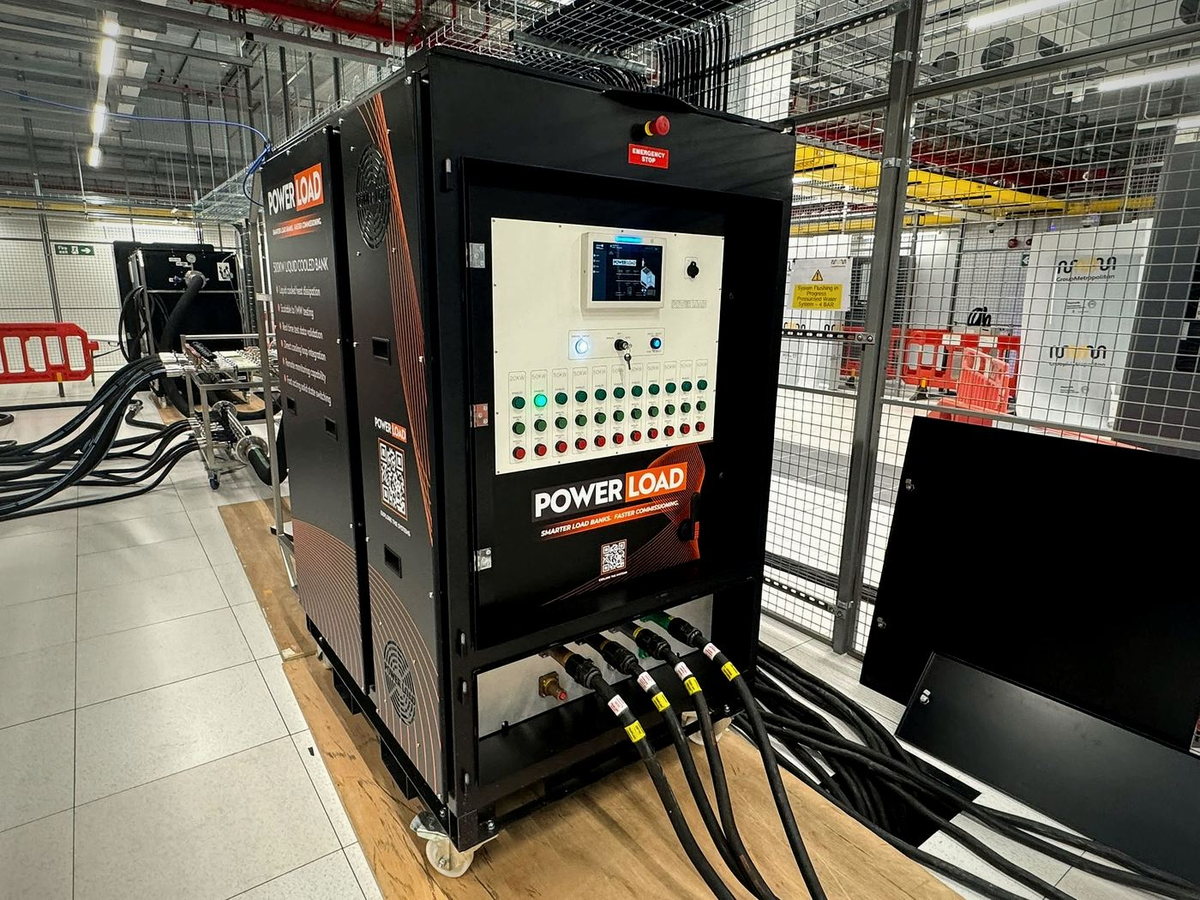
Switchgear that carries its full rating has proven capacity. AI load also surges, so the distribution has to be shown holding its voltage and frequency while the load moves.

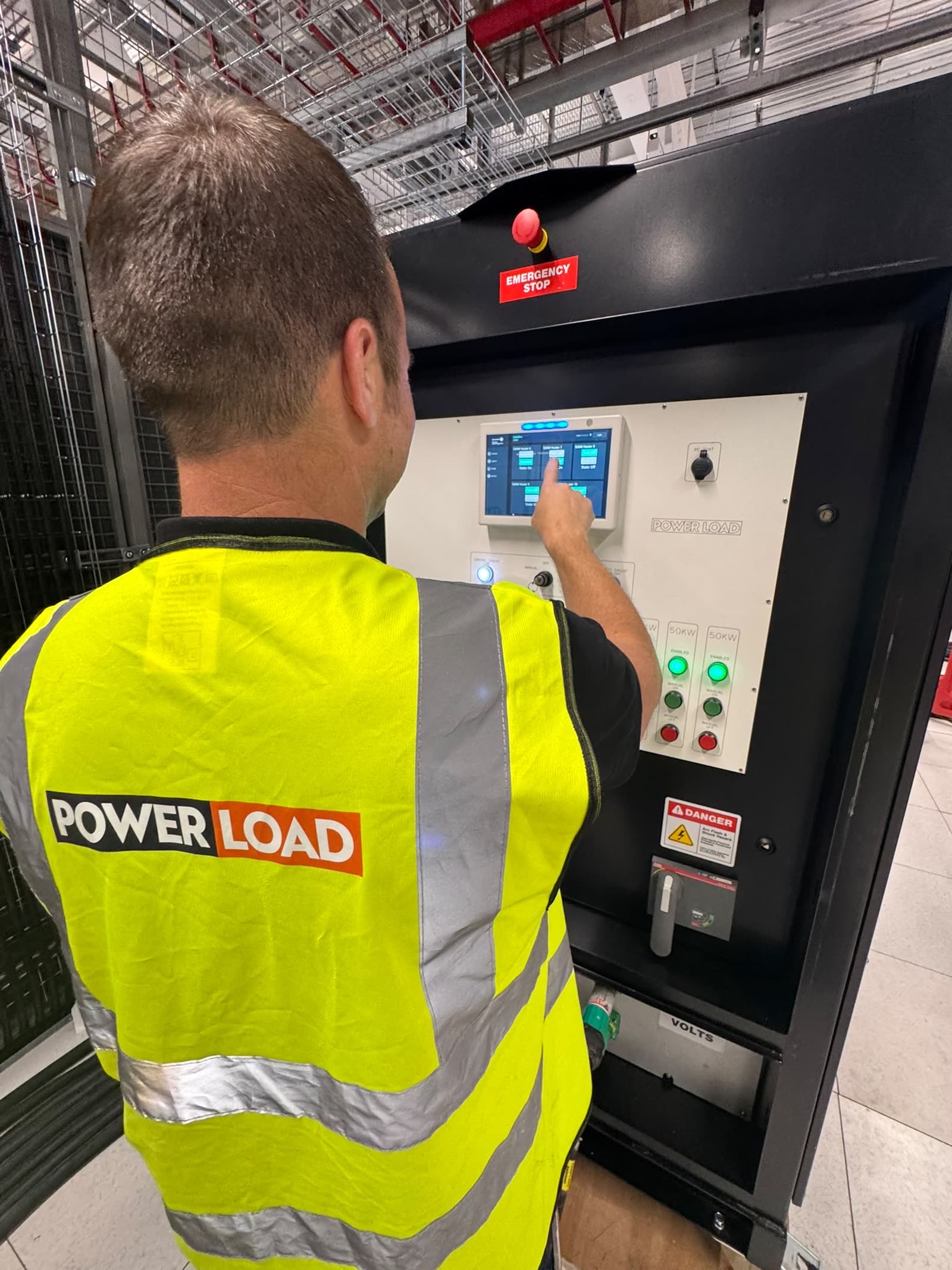
Testing switchgear and power quality means applying a controllable IT electrical load to the distribution and watching voltage, frequency and harmonic distortion as the load moves. Base build testing proves the distribution carries the full IT load. End-of-line testing replicates the surges of AI racks at each rack position, in both directions, so the behaviour of the whole supply is proven before the GPUs are installed.
Each point is read from logged data while the load steps up and down.
The switchgear and distribution carry the full IT load at the design condition.
How far voltage dips and recovers on a fast step, and on a sudden drop in load.
How the supply holds frequency while the load changes.
Distortion as the load switches, rather than at a constant profile.
How the generators, UPS and distribution behave when they all respond at once.
The two ranges answer different questions, and a hall usually needs both.
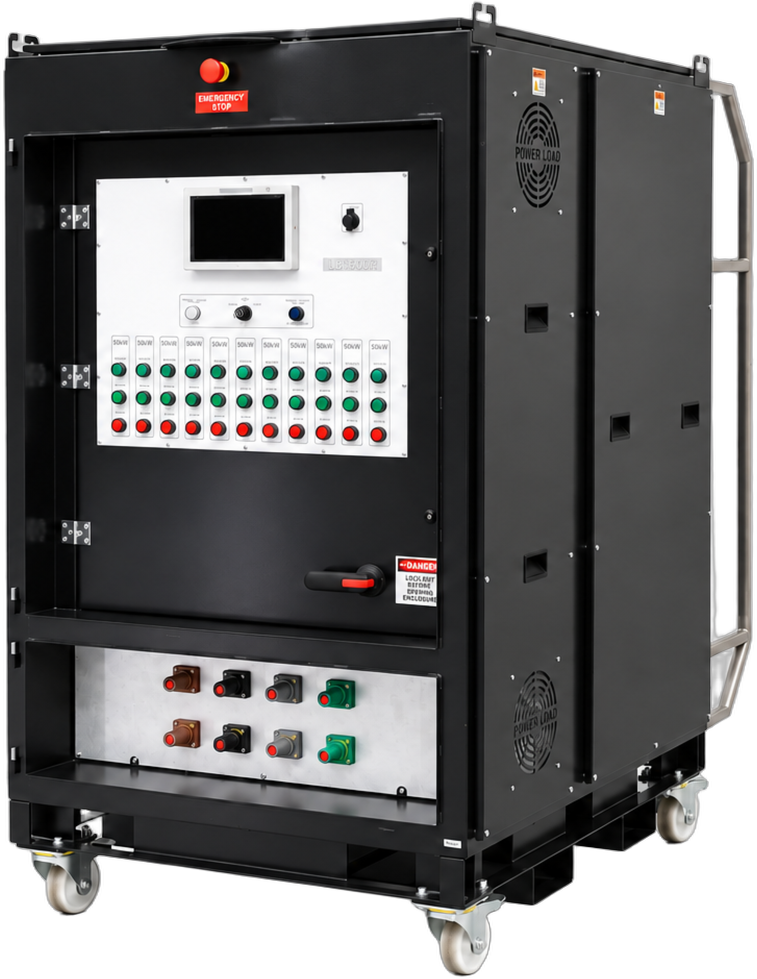
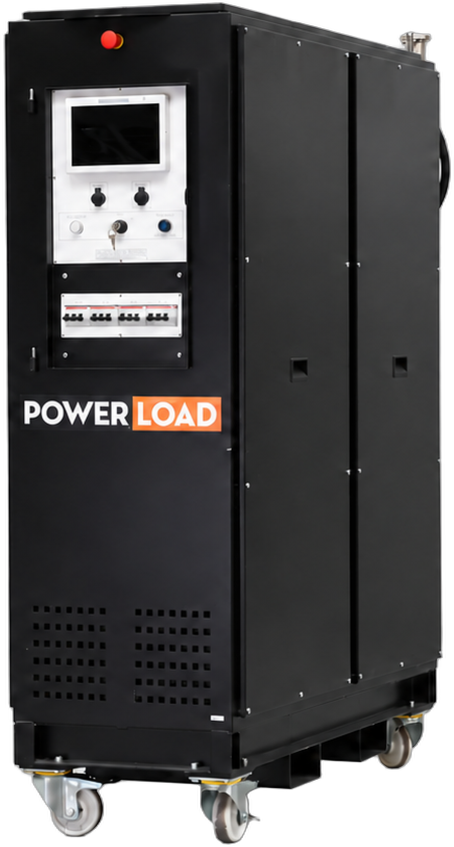
Base buildLB500, LB600 or LB700 loads prove capacity through the distribution as the hall is built
End-of-lineLCLB 160 and LCLB 240 apply the surges of AI racks at each rack position, with solid-state switching
See the end-of-line rangeThe same units that load the cooling load the supply, so electrical and heat load are tested together.

Tell us the IT load and how the hall is fed. We will help you specify the test.