Base build

Base build testingLB500LB600LB700ACLB 200Standard or solid-state switching

End-of-line

End-of-line testingLCLB 160LCLB 240ACLB 60

Applications

Cooling

Chillers and cooling plantStatic and dynamic load testing

Power

UPS systemsGeneratorsSwitchgear and power qualityProtection settings

Explained

Liquid coolingGPU load testingWater qualityLoop monitoringCommissioning

Equipment

Commissioning equipment

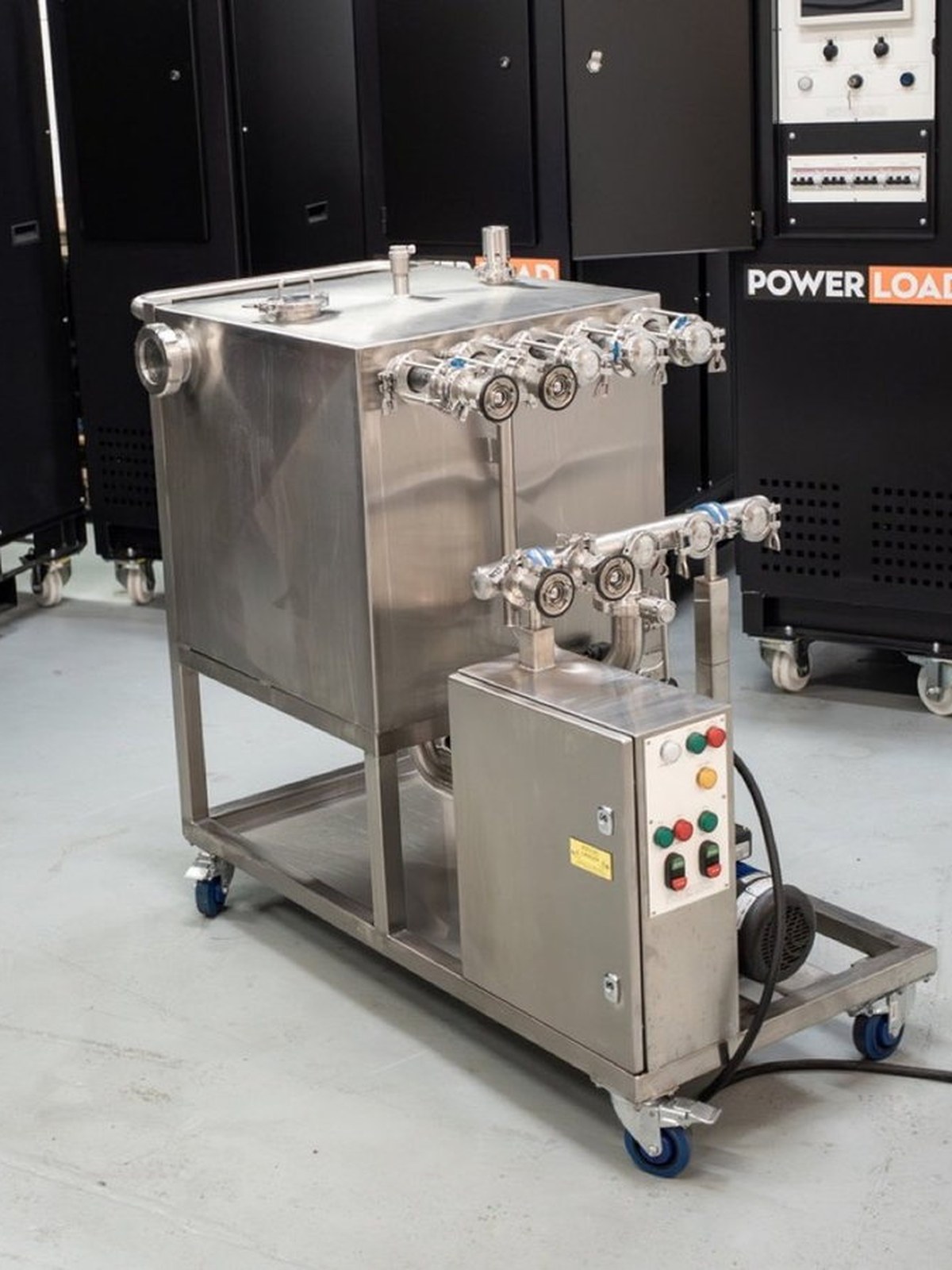
Manifold trolleyFlushing & refill cart

Tools

The full rangeSizing calculatorDatasheets

Services

Commissioning supportLoad bank hireHigh load simulationBespoke load banksSupply and installationMaintenance and repairDeployment and managementBuy or hireProjects

Company

AboutPartnersProjectsAcademyNewsEventsFAQ Speak to the team
The full picture

Testing liquid-cooled AI data centres, base build to end-of-line

AI has changed the behaviour of the load, not just its size. The cooling has to be shown responding when the load changes, as well as carrying it.

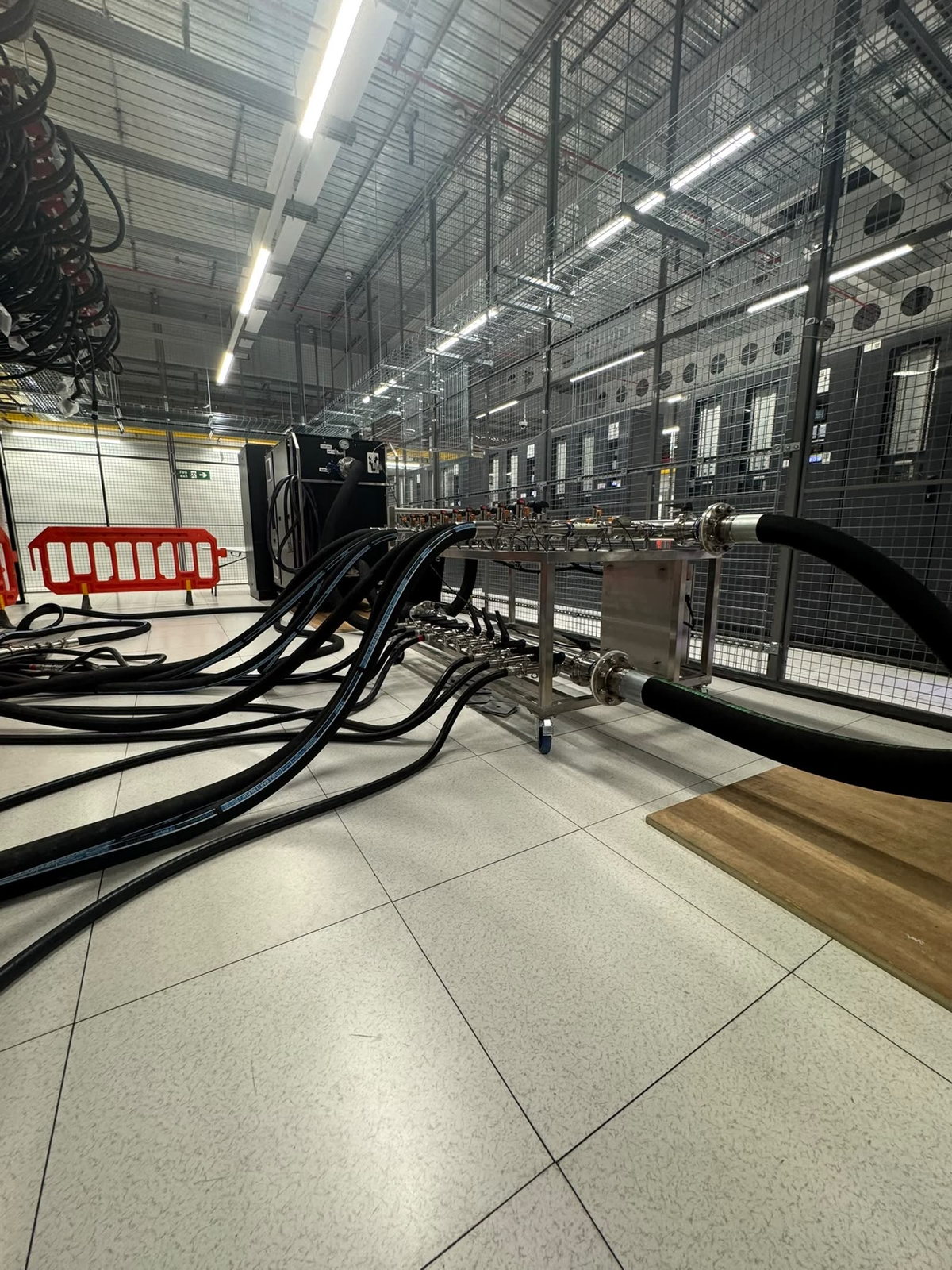
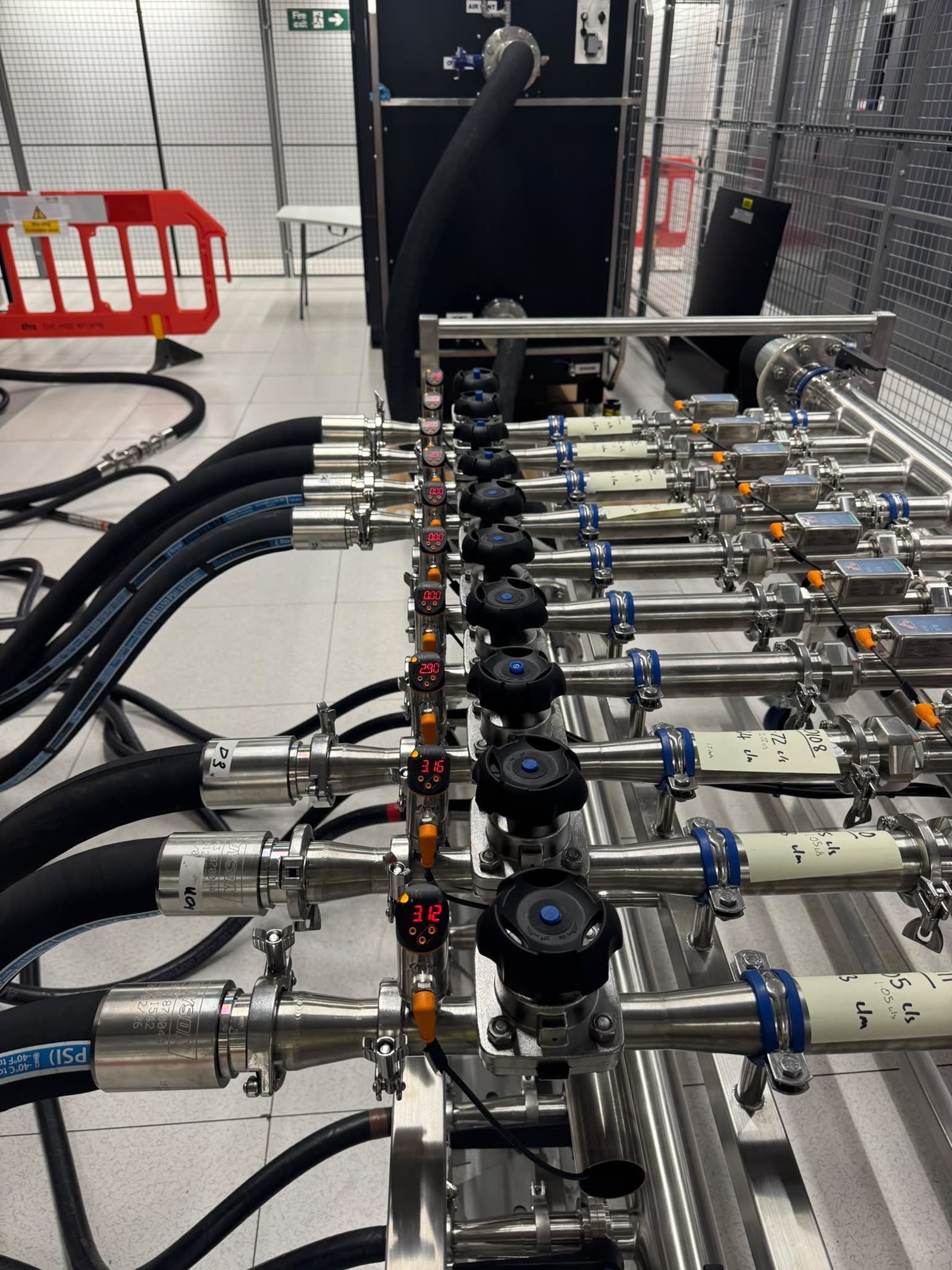
Coolant hoses connected to a PowerLoad manifold with flow sensors, in a live data hall
700kWLargest liquid-cooled unit
250Units on one controller
2Ranges: base build, end-of-line
RackPosition, not just riser

A liquid-cooled AI hall is tested in two ranges. Base build testing puts a dependable, controllable heat load into the chillers, CDU and risers while the hall is built, to prove they have the capacity. End-of-line testing replicates the true rack-level heat and electrical load at each rack position, to show how the whole cooling and power system responds, in both directions, before the GPUs are installed.

The sequence

Four stages, in order

01

Flush the loop

New loops carry debris that ends up in the cold plates. Clean the loop and prove it clean first.

02

Fill and prove flow

Confirm flow and pressure at the racks, not just at the CDU.

03

Base build: load the loop and the supply

Heat and electrical load applied together, to prove capacity.

04

End-of-line: change the load

Replicate the racks at each rack position, with the load rising and falling.

What gets proven

The whole system, not one component

It is not enough to put a large amount of heat into a room and say the cooling system has been tested. The system is proven by loading the whole chain and watching how it responds.

  • Coolant quality and loop cleanliness before any load is applied
  • Flow, pressure and temperature at each rack
  • CDU, pumps, control valves, sensors and controllers responding together
  • Chillers and cooling plant following the load
  • Electrical supply and protection against a moving load
  • Generators and UPS following the load, up and down
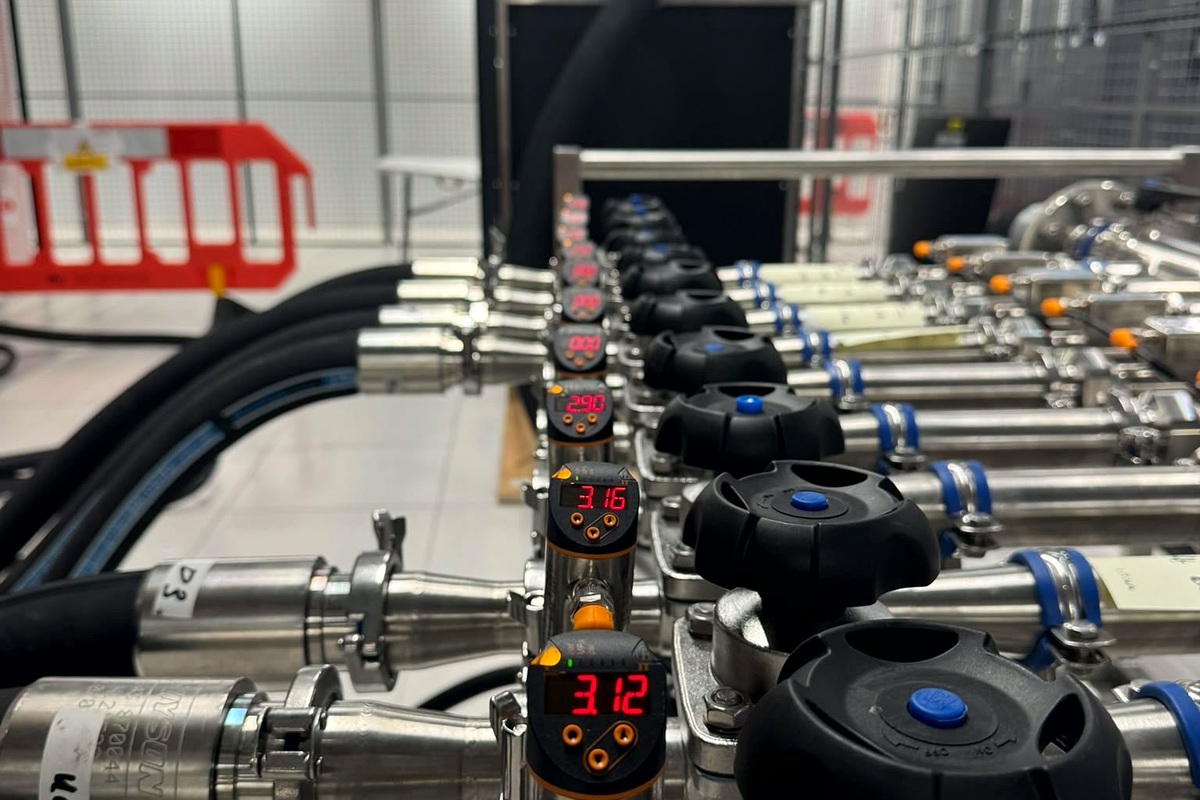
Coolant valves and manifold during liquid cooling commissioning
Why it is harder now

What changed with AI

Direct-to-chip cooling and AI load arrived together, and each makes the other harder to prove.

Behaviour

The load moves between near idle and full draw quickly, so the cooling has to follow the peaks as well as the average.

Both directions

The system has to respond when the load suddenly reduces, as well as when it rises.

Coupling

The electrical and thermal systems are now genuinely coupled, so proving them separately proves neither.

Precision

Cold plates and narrow passages are unforgiving about coolant quality.

Air

Not every component in a server is liquid cooled, so some heat still needs air cooling.

Position

Performance varies from rack to rack, so a hall average can hide a rack that does not work.

End-of-line testing

Rack-level testing

Proving the riser proves the feed. End-of-line testing replicates the IT electrical and heat load at the rack, which also proves the busway, the tap-off, the local protection and the manifold branch.

  • Load applied where the rack will sit
  • Manifold branch flow confirmed rack by rack
  • Base build testing first, then end-of-line testing
See the GPU emulators
The equipment

What each part of the sequence needs

Flushing the coolant loop before commissioning
Stage one. The loop is cleaned and proven before any load.
Manifold rig connected to a liquid-cooled load bank
Stage two. Units connected into the loop through the manifold.
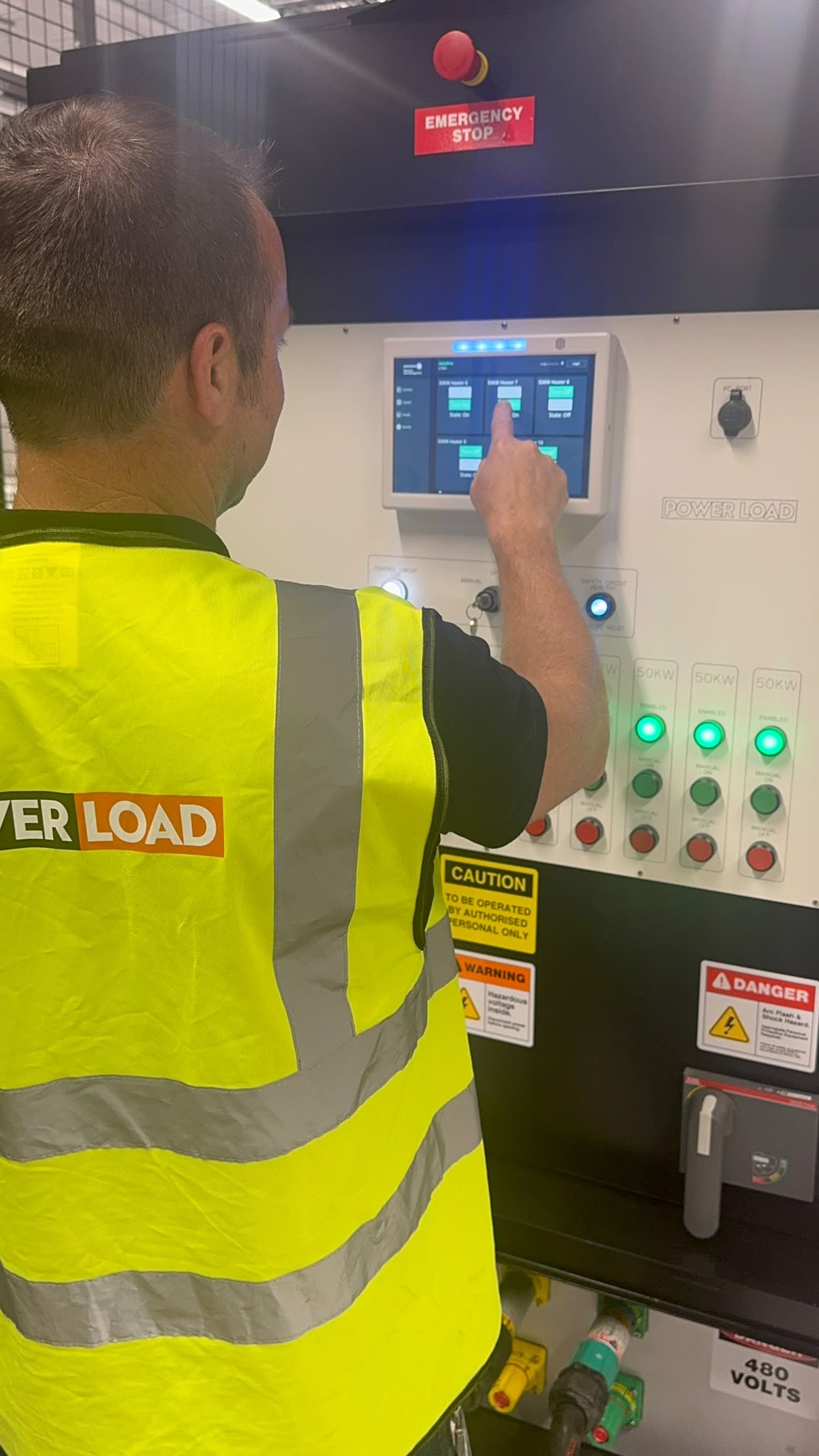
Engineer monitoring load during commissioning
Stages three and four. Load applied and watched.
FAQ

Liquid cooling, answered

In a sequence. Clean and prove the coolant loop first, then fill it and confirm flow and pressure at every rack, then apply electrical and heat load together, then change the load quickly, up and down. The base build range proves capacity. The end-of-line range then replicates the racks. The tests are run by the client's commissioning agent or accredited partners.
Yes. A liquid-cooled load bank rejects its heat into the coolant loop, so it exercises the CDU, the manifold and the loop as the racks will, before any accelerator is on site.
A coolant distribution unit is the interface between the facility water and the technology loop serving the racks. It has to follow the heat as it rises and as it falls, so it is tested with a load that changes.
Applying the load where the racks will sit, rather than at the riser. It proves the busway, the tap-off, the local protection, the manifold branch and the flow at the rack itself.
A new loop can carry manufacturing debris, and it ends up in the narrowest passages, which are the cold plates. Flushing and proving coolant quality before load is applied protects the IT equipment.
A liquid-cooled load bank rejects heat into the coolant loop, which proves the CDU, the manifold and the loop. An air-cooled unit rejects heat into the room. Even with direct liquid cooling, some components in a server still need air cooling, so the end-of-line range includes the ACLB 60 to recreate that heat.
Enough to reach the design condition. The liquid-cooled units range from 160kW to 700kW each, and up to 250 units run on one controller for hall-scale testing.
Yes. The 700kW LB700 suits chiller and larger cooling plant testing as well as CDU and riser proving.
PowerLoad equipment is built for a range of site conditions, including outdoor testing. The exact ingress-protection specification is being confirmed, so speak to the team about your site conditions before assuming a specific rating.
Go deeper

The detail behind each stage

Replicate your design before the hall goes live

Send the IT load, the cooling design and the programme, and we will tell you what testing it takes.