Base build

Base build testingLB500LB600LB700ACLB 200Standard or solid-state switching

End-of-line

End-of-line testingLCLB 160LCLB 240ACLB 60

Applications

Cooling

Chillers and cooling plantStatic and dynamic load testing

Power

UPS systemsGeneratorsSwitchgear and power qualityProtection settings

Explained

Liquid coolingGPU load testingWater qualityLoop monitoringCommissioning

Equipment

Commissioning equipment

Manifold trolleyFlushing & refill cart

Tools

The full rangeSizing calculatorDatasheets

Services

Commissioning supportLoad bank hireHigh load simulationBespoke load banksSupply and installationMaintenance and repairDeployment and managementBuy or hireProjects

Company

AboutPartnersProjectsAcademyNewsEventsFAQ Speak to the team
Static and dynamic load testing

Static and dynamic load testing

A static test proves the hall can carry a number. A dynamic test proves the cooling and power respond when that number changes. AI load needs both.

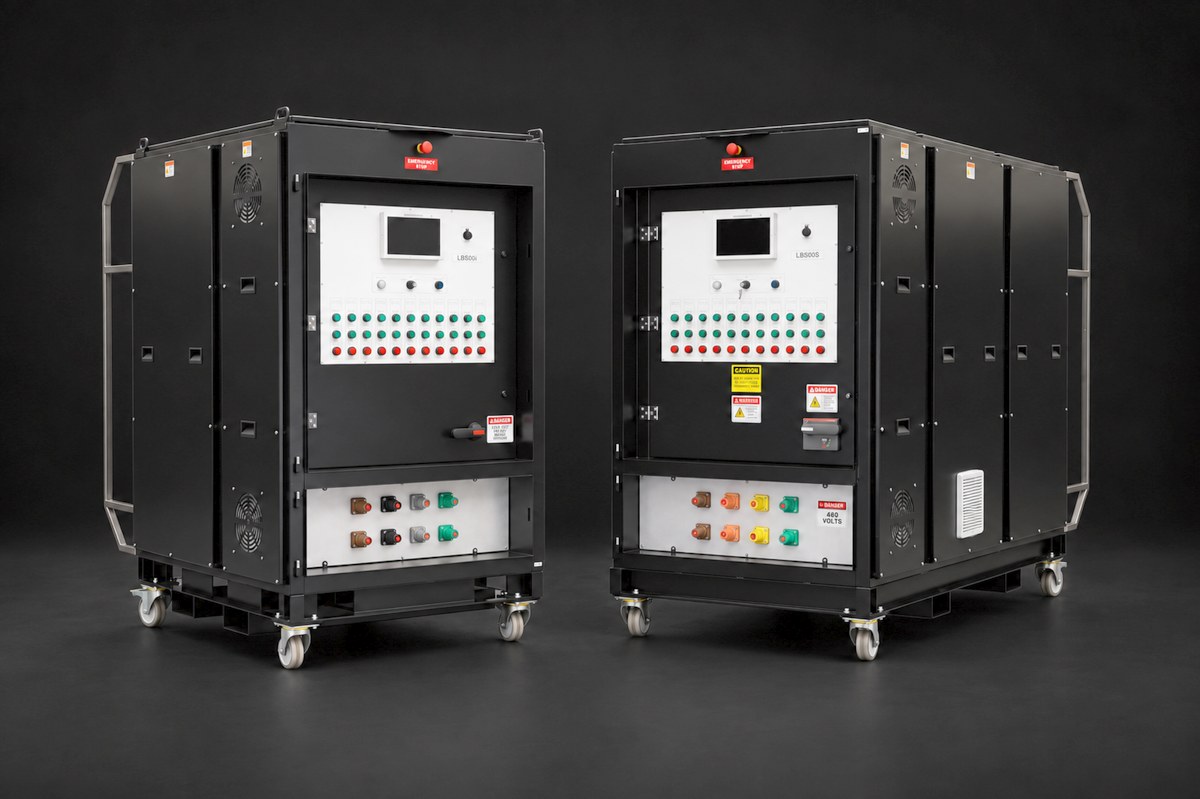
A pair of PowerLoad load banks ready for testing
StaticProves capacity
DynamicProves response
2Ranges, one per test
250Units on one controller

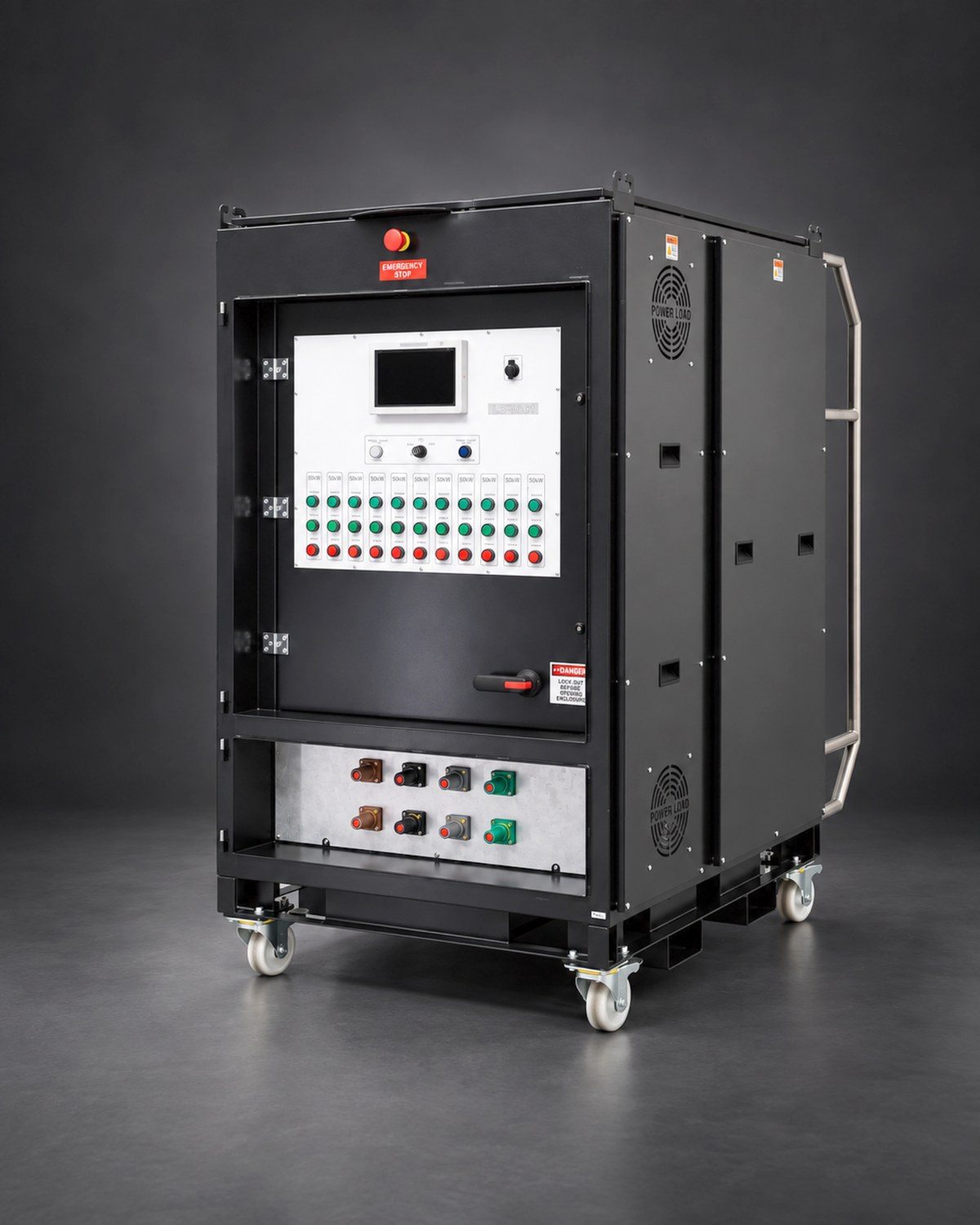
Static load testing applies a steady load to prove the hall can carry its rated capacity, and it is still a required test. Dynamic load testing changes the load quickly, up and down, to prove how the whole cooling and power system responds. Static work is done with the base build range. Dynamic work uses solid-state switching, optional on the base build range and standard on the end-of-line GPU emulators.

What it shows

What each test shows

The two tests answer different questions, and neither replaces the other.

Static: capacity

The chillers, CDU, switchgear, UPS and generators carry the full IT load at the design condition.

Static: specification

Where the specification only requires static load testing, the base build range does it.

Dynamic: response

How cooling and power follow the load as it rises quickly.

Dynamic: both directions

How they respond when the load suddenly reduces.

Together

Electrical and heat load applied at the same time, so the whole system is tested rather than each part.

Which range

Static on the base build, dynamic at end-of-line

Each range is built for one job, and a hall usually runs both in turn.

Equipment

What is used

Both ranges run from the same controller, so one test programme can include static and dynamic stages.

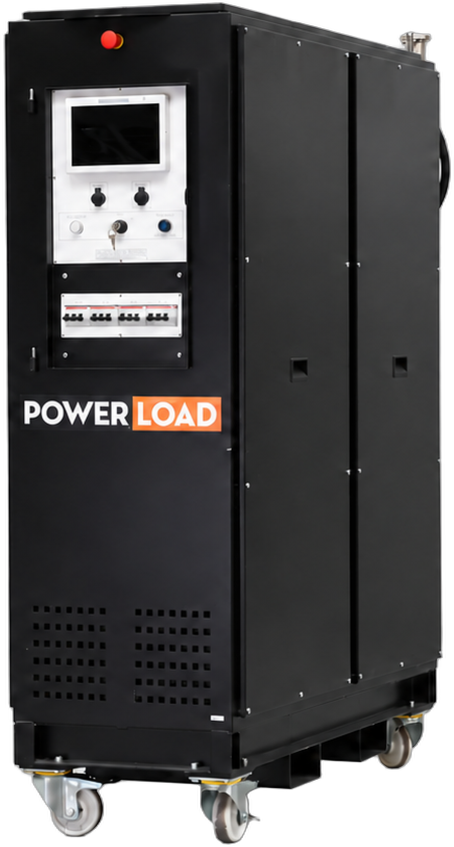
  • LB500: 500kW on 4 inch flow and return
  • LB600: 600kW in the same footprint as the LB500
  • LB700: 700kW on 5 inch flow and return, with 1kW solid-state switching as an option
  • LCLB 160 and LCLB 240 for rack-level replication, ACLB 60 for the air-cooled heat
  • Up to 250 units on one controller, with exportable test data
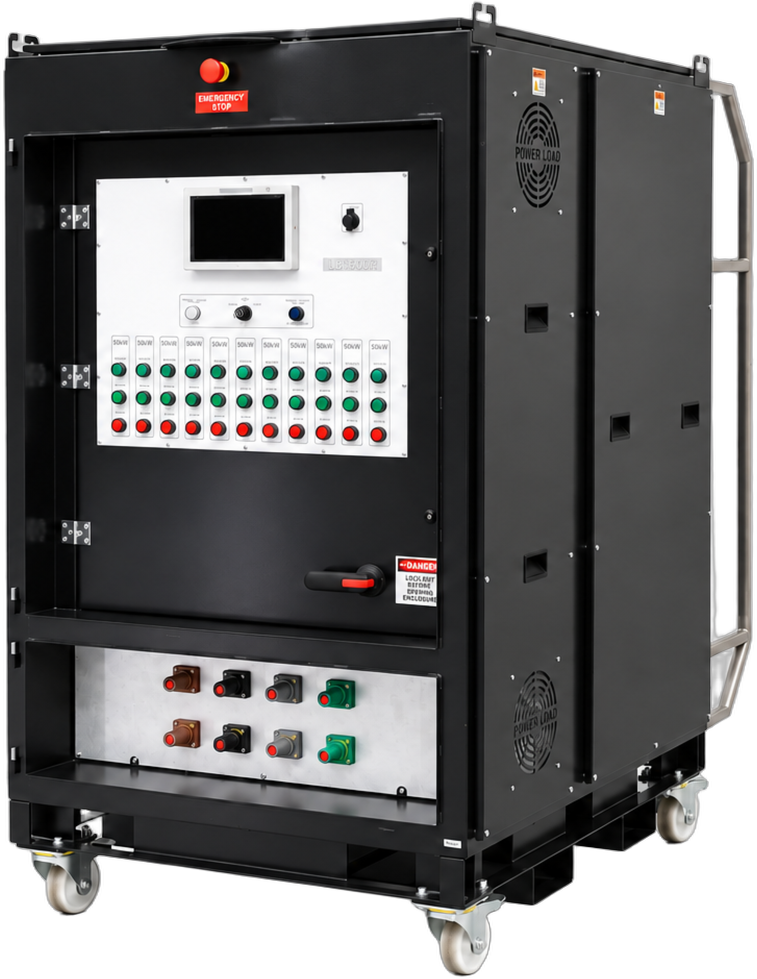
PowerLoad load bank control and switching panel
FAQ

Static and dynamic load testing, answered

Applying a steady load to prove a data hall can carry its rated capacity. It is the traditional load test and a required one.
Changing the load quickly, up and down, to show how the cooling and power respond. It uses solid-state switching, which steps the load far faster than contactor-based banks.
Where the specification only requires static testing, the base build range covers it. For AI halls, dynamic testing at the rack adds the response that capacity alone does not show.
Related

Related applications

Plan the static and dynamic tests

Tell us what the specification requires. We will tell you which range covers each stage.