Base build

Base build testingLB500LB600LB700ACLB 200Standard or solid-state switching

End-of-line

End-of-line testingLCLB 160LCLB 240ACLB 60

Applications

Cooling

Chillers and cooling plantStatic and dynamic load testing

Power

UPS systemsGeneratorsSwitchgear and power qualityProtection settings

Explained

Liquid coolingGPU load testingWater qualityLoop monitoringCommissioning

Equipment

Commissioning equipment

Manifold trolleyFlushing & refill cart

Tools

The full rangeSizing calculatorDatasheets

Services

Commissioning supportLoad bank hireHigh load simulationBespoke load banksSupply and installationMaintenance and repairDeployment and managementBuy or hireProjects

Company

AboutPartnersProjectsAcademyNewsEventsFAQ Speak to the team
Home/Products/Flushing & Refill Cart

Flushing and refill cart for coolant loops

New pipework leaves slag, filings and mill scale in the loop. The cart removes them before the coolant reaches a cold plate. It supports both the base build and end-of-line ranges.

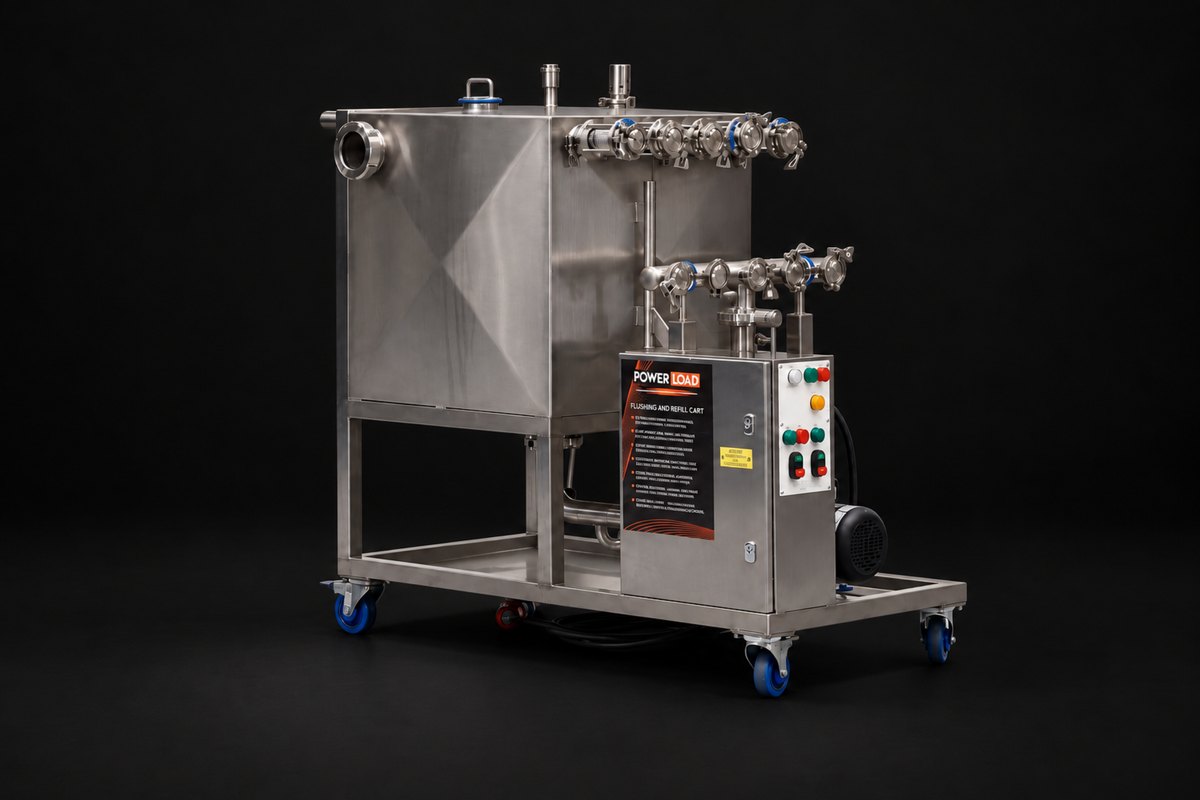
PowerLoad flushing and refill cart, a 250 litre stainless steel tank and dual pumps on a wheeled stainless frame
250LTank capacity
25µmFiltration
5500kW units per cart
5 + 5Inlet and outlet ports

Filtering the loop

The cart circulates the whole loop through a 25 micron filter, vents the air it frees on the way round, then charges the system from its own tank.

Return to tank, round again until it runs clean Tank 250L, 316 stainless Pump Swarf, scale, debris 20µm Filter Clean coolant Cooling loop Risers, manifolds, cold plates Trapped air vented Charged from the tank Clean before the first load test
Filtered coolant Swarf, scale and debris Return to tank
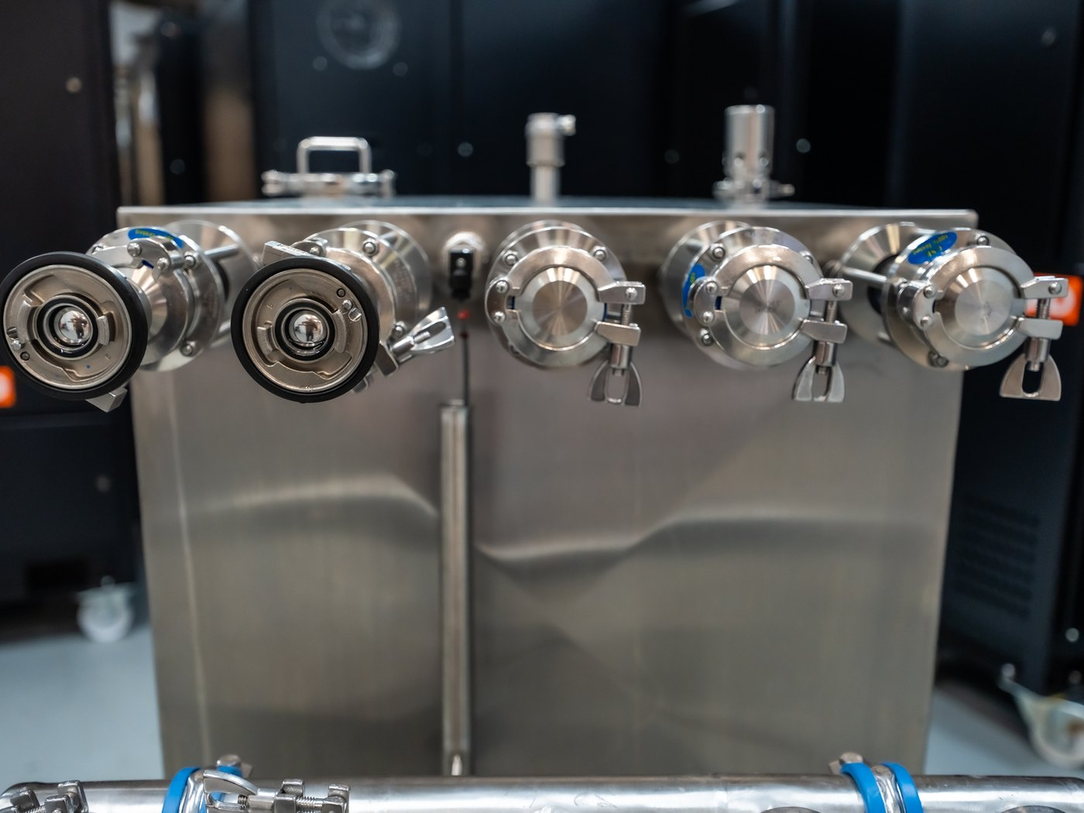
The 316-grade stainless tank on the PowerLoad flushing and refill cart, with its inlet and outlet ports
Flushing & refill cart

Dual-pump flush and fill

A 304-grade stainless frame carrying a 250L 316-grade tank, two pumps and a 25 micron filter. Controlled pressure keeps trapped air and debris from causing unstable flow and temperature spikes once load testing begins.

  • Frame304-grade stainless
  • Tank250L, 316-grade stainless
  • Tank featuresVacuum relief, auto air vent, sight glass
  • PumpsCirculation plus fill with wand
  • Filtration25 micron
  • Manifold5 inlet, 5 outlet ports
  • CompatibilityFD83, Tri-clamp, UQD
Ask about the cart
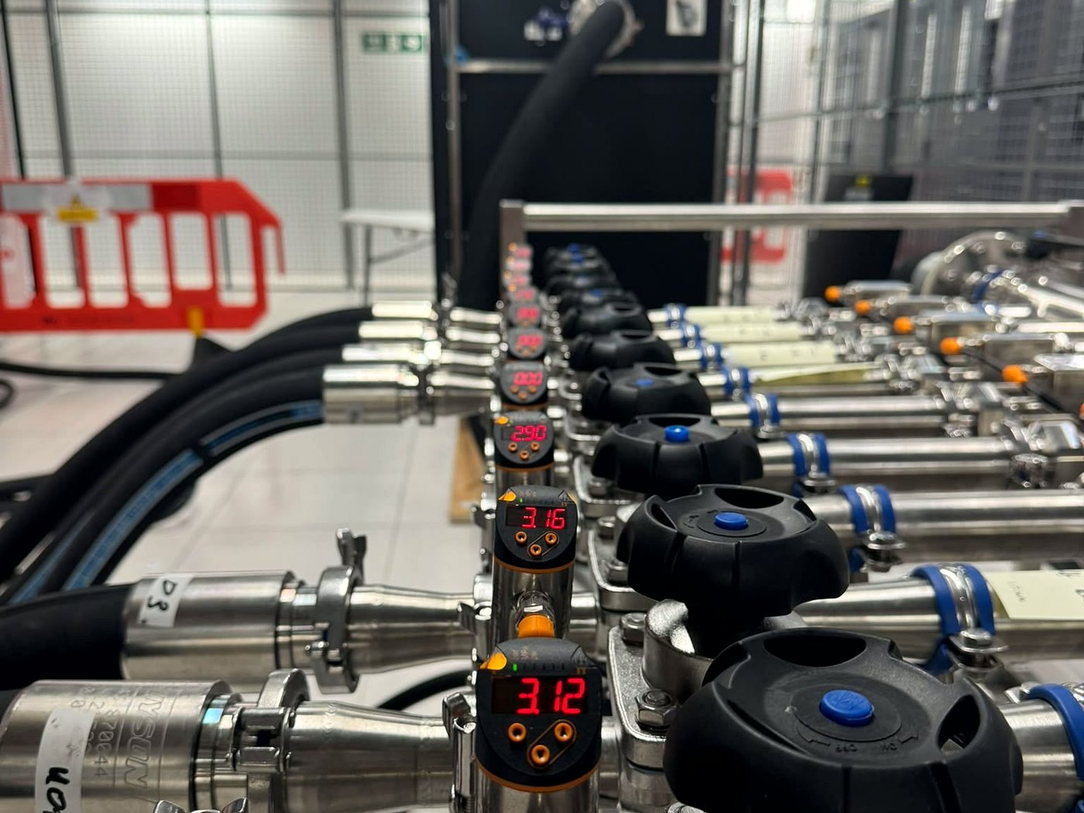
Flow and pressure readings on a PowerLoad commissioning manifold in a live data hall
Water quality

Scale on heat transfer surfaces

In a direct-to-chip system the coolant is part of the machine. It runs through micro-channels inside the cold plates and through the CDU, so contamination always has somewhere to lodge. Less than half a millimetre of scale on a heat transfer surface cuts heat transfer by around a third.

The damage is not only blockage. Particulate in circulation erodes pump internals and damages valve seats, so a loop that was never cleaned properly degrades quietly and shows up months later as reduced flow and rising temperatures.

Water quality, explained
The sequence

Flush, vent, charge, then flush again

Commissioning is the only window in which the loop can be cleaned properly. Once the racks are live you cannot drain it again.

01  Flush and filter

The circulation pump drives the full loop volume through the 25 micron filter, round and round, until the swarf, weld slag and mill scale left by the pipework have been taken out of circulation.

02  Vent the air

Flow frees the air pockets a static fill leaves behind. The tank's auto air vent takes them out, so no pocket is left to migrate under flow and starve a branch mid-reading.

03  Charge the loop

The dedicated fill pump and wand charge the system to its working volume, with the sight glass and vacuum relief keeping the fill controlled rather than approximate.

04  Flush again after testing

The same connection is used at the end of the job to flush and condition the system, so the load banks are not left standing with used fluid in them between commissioning programmes.

Watch

The kit, explained

How the flushing cart works
Connecting the cart
Why clean water matters
Why clean loops matter
Where delays start
Pairs with

The rest of the loop side

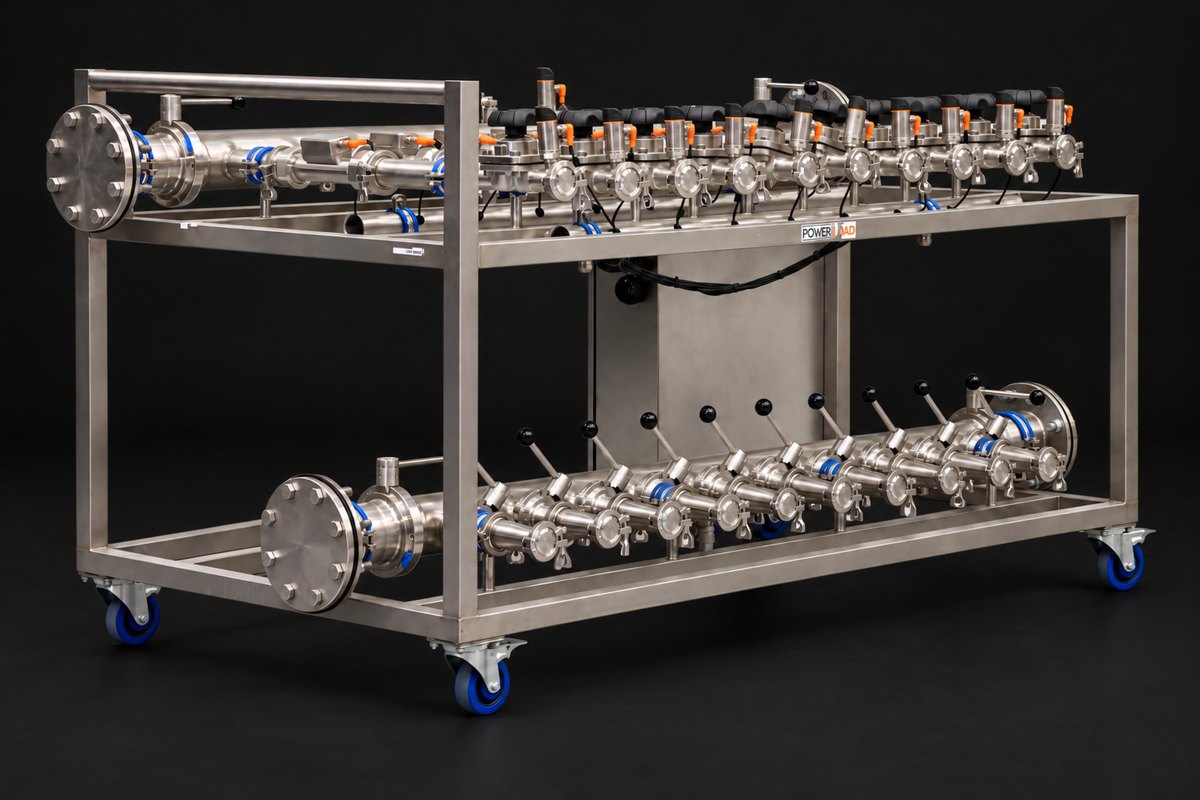
The cart cleans and charges the loop. The manifold trolley then distributes it to regulated, individually metered outlets before the load bank applies load.

FAQ

Flushing and water quality, answered

A flushing and refill cart fills, cleans and drains a liquid cooling loop at controlled pressure. The PowerLoad cart is built around a 250L 316-grade stainless tank with dual pumps and a 25 micron filter. It circulates coolant to strip out swarf, weld debris and mill scale, vents trapped air, then charges the loop, so the readings taken during load testing reflect the system rather than the dirt in it.

In a direct-to-chip system the coolant passes within millimetres of the die through channels as fine as a human hair, so anything carried in the fluid has somewhere to lodge. Less than half a millimetre of scale on a heat transfer surface can cut heat transfer by around a third. Particulate in circulation also erodes pump internals and damages valve seats, so a loop that was never cleaned properly degrades in ways that only appear months into service as reduced flow and rising temperatures.

A new system is the dirtiest it will ever be on the day it is finished. Miles of freshly cut and welded pipework leave slag, filings and mill scale behind, and the moment the loop is filled that debris travels towards the pumps and the cold plates. Commissioning is the only window in which the loop can be flushed, drained, dried and charged properly, because once the racks are live you cannot drain it again.

The cart is built around a 250L 316-grade stainless tank with vacuum relief, an auto air vent and a sight glass. A high-volume circulation pump handles the flushing stage and a dedicated fill pump with a wand handles filling and topping up.

One cart connects directly to the load bank units and services up to five 500kW units from a single position, so a full bank of test equipment is prepared from one connection point rather than unit by unit. That ratio decides how much of the commissioning window is spent on preparation and how much is left for testing.

Yes. The same connection is used at the end of the job to flush and condition the system again, so the load banks are not left standing with used fluid in them and are clean and protected before the next commissioning programme.

The cart carries a manifold with five inlet and five outlet ports and shares the FD83, Tri-clamp and UQD standards used across the PowerLoad range, so it connects to the load banks and the commissioning manifold trolley without adaptors.

Yes. The cart is available for hire alongside the load banks and the manifold trolley. Speak to the team about availability for your programme.

Equipment for your project

Talk to us about the flushing and refill cart and the manifold trolley, for either range.