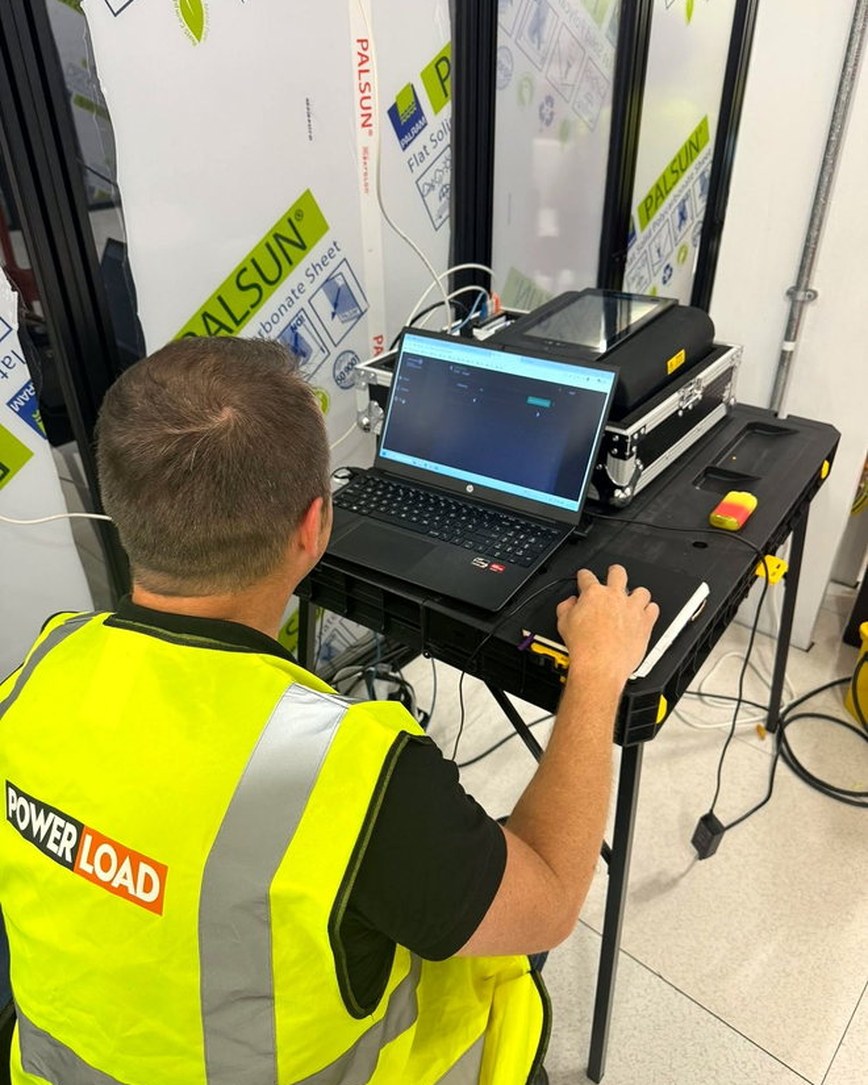
The test setup has to keep pace
Hyperscale sites grow fast, and the test setup has to grow with them. Equipment that is fixed in place, awkward to scale or slow to reconfigure becomes the thing everything else waits for.
Every phase of the project needs hardware that can be expanded, repositioned or combined without slowing the team down. That requirement is why modularity matters here more than it would on a single-phase build.
Each unit alone or as part of a larger system
Each unit is built to operate on its own or as part of a larger system, which means capacity is added by adding units rather than by moving to different equipment.
The connections, fittings and layouts are designed around that, so scaling the setup is a matter of extending what is already there, up to 250 units on one controller. It applies to both the base build and end-of-line ranges.
When phases overlap and timelines accelerate
The scenario modularity is really designed for is the one that always happens: phases overlapping and timelines accelerating.
When that happens you do not want to rebuild the entire test environment. You want to add, extend and adapt with minimal friction, and continue from the configuration already proven rather than starting again.
What modular design delivers
Modular design reduces downtime and supports the rapid deployment hyperscale projects demand.
The measure of it is simple: when the programme changes, the test environment changes with it, and nobody loses a week to reconfiguration.