Where contamination actually does damage
Coolant quality matters because of the size of the passages. Direct-to-chip cold plates use micro-channels and a CDU has tight tolerances on the secondary side, and anything carried in the fluid eventually arrives at one of them.
Particulate also erodes pump internals and damages valve seats, so a loop that was never cleaned properly degrades in ways that only show as reduced flow and rising temperatures months into service.
Small amounts are enough
It does not take visible dirt. Small amounts of contamination are enough to fur up a manifold, cut flow through it and pull down thermal performance downstream.
Because the effect is gradual and hidden in sealed pipework, it presents as a performance problem. Racks throttle and temperatures sit above design while nothing looks broken.
Filtering continuously, not once
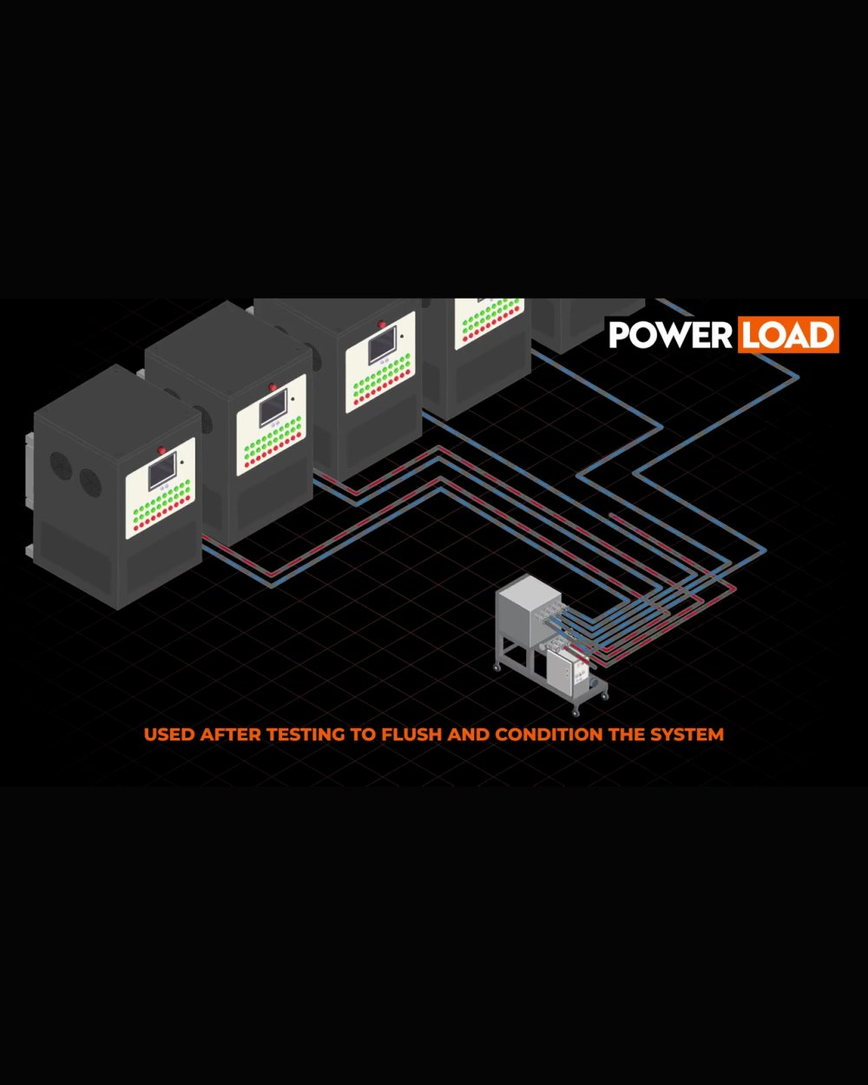
A single flush at the start is better than nothing, but cleanliness is not a one-off event. The PowerLoad flushing and refill cart filters continuously while testing runs.
That matters because testing disturbs the system. Connecting, reconfiguring and running the loop hard all mobilise material that was sitting still, and filtering while you test catches what the first flush released.
Filling and draining safely in a live hall
All of this happens surrounded by electronics. The cart is built to fill and drain systems inside the hall without leaks.
It is field proven on live projects rather than adapted from general-purpose plant, which is what makes it usable where a spill is an incident, not an inconvenience.